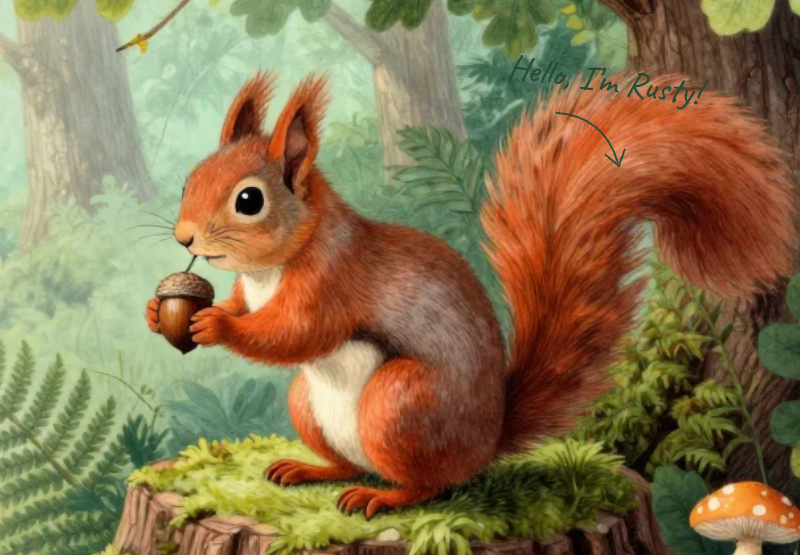
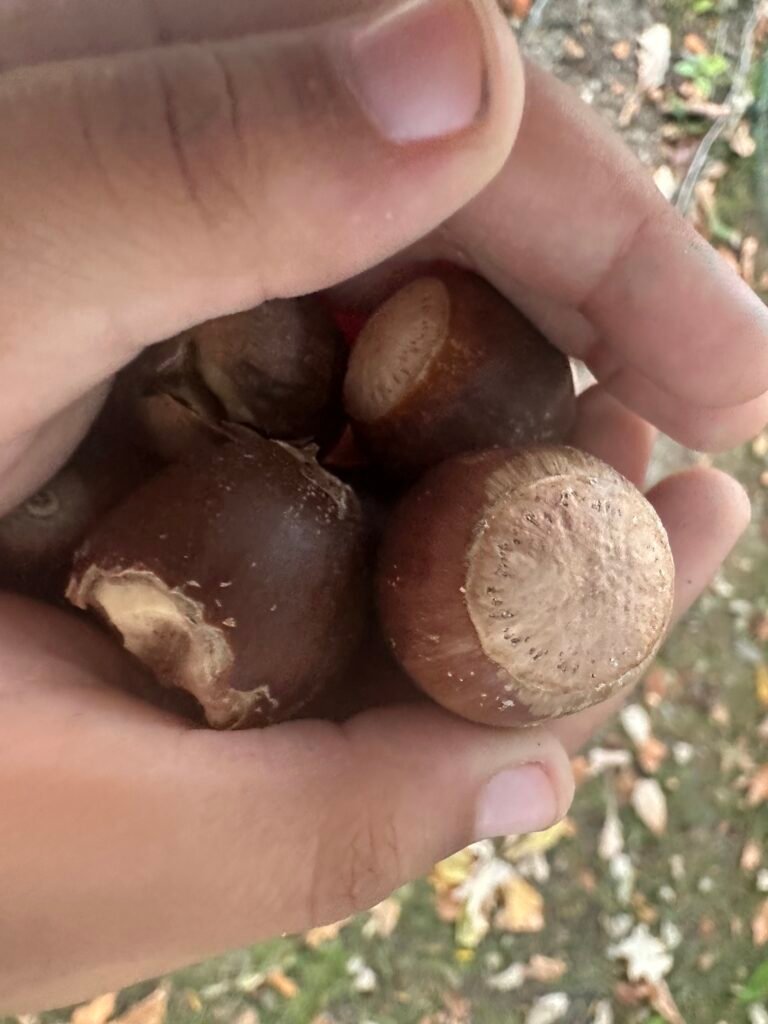
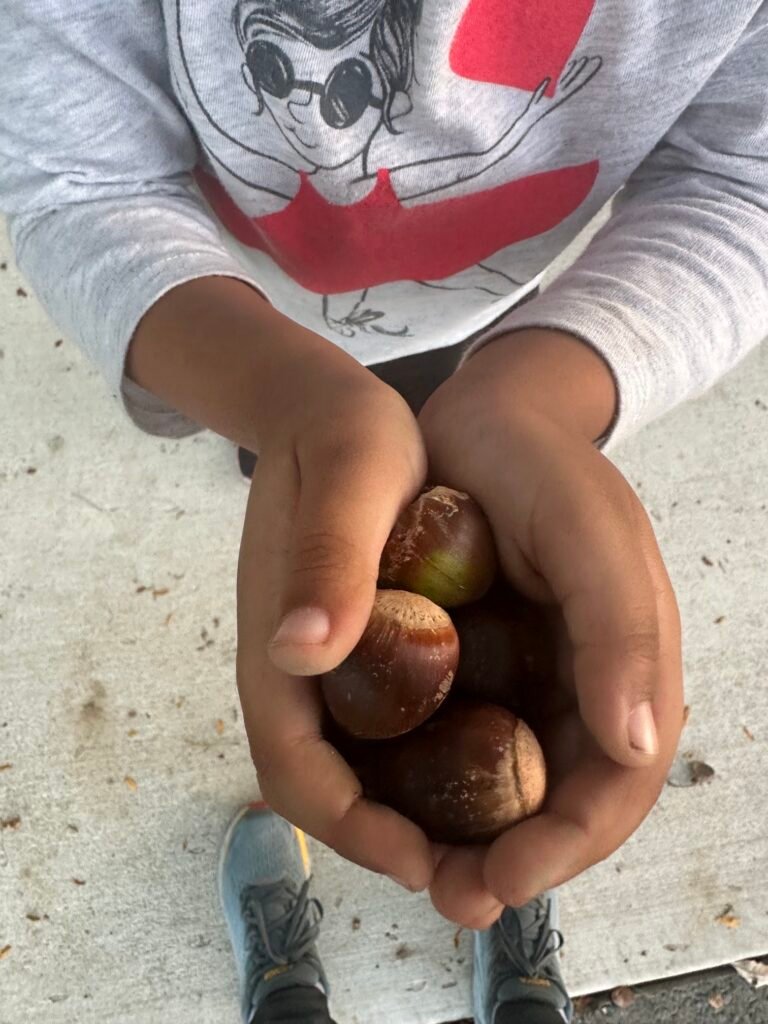
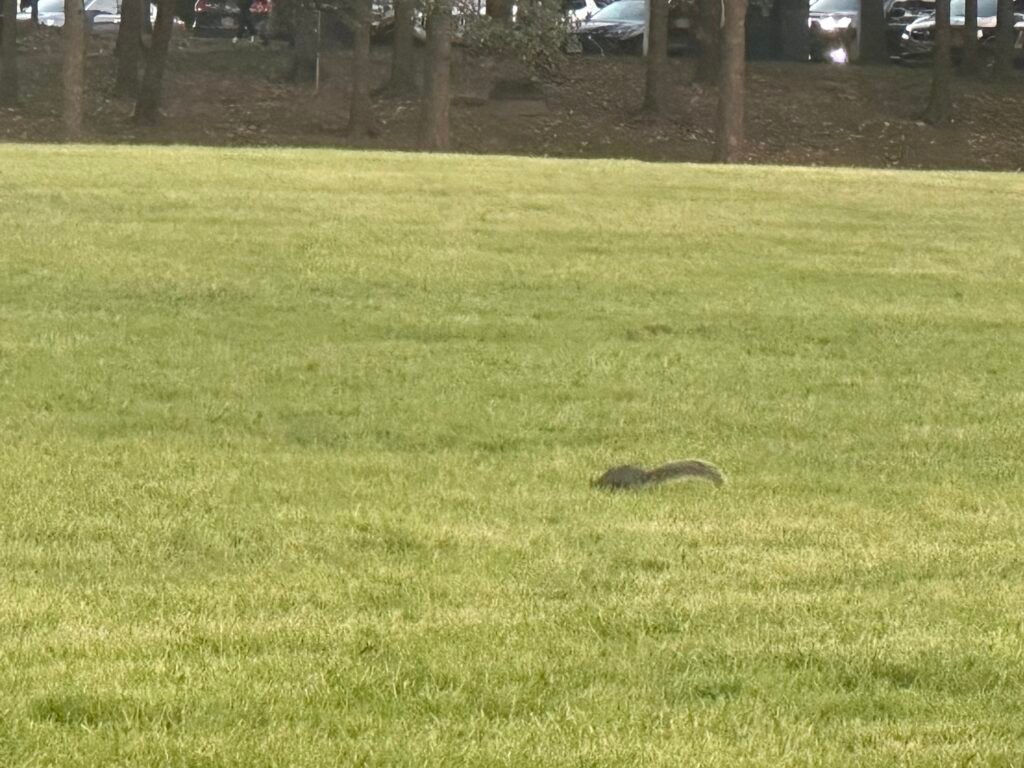
Every autumn, a squirrel can bury as many as 3,000 nuts, and one study found squirrels never dig up as many as 74% of them. Some of those forgotten nuts grow into trees. Squirrelnator- a virtual AI learning Lab – turns that small, funny fact of nature into a big idea: a forgetful squirrel is an accidental gardener, and figuring out how many trees it planted is a perfect first lesson in data science.
Picture Rusty, a busy red squirrel, racing around a park. He buries an acorn by the fence, another under the bench, another beside the slide. By spring, his friend Hazel notices oak seedlings popping up in places far from any big oak. The oldest tree in the park, Professor Oakley, asks the question that starts everything: how many trees in this park did squirrels plant by accident?
You can’t answer that by guessing. You have to look, count and think carefully. That’s what data scientists do, and it’s what Squirrelnator teaches.
What Squirrelnator™ is.
Squirrelnator™ is a gentle data science course for middle schoolers, high schoolers, college students and curious adults. It follows a real data science project from start to finish across 10 short modules: ask a good question, collect data, organize it, describe it, picture it, measure chance, test cause, predict, check for mistakes, and share what you found.
Every module follows the same friendly rhythm, so nobody feels lost:
- The Mystery: a short squirrel story that ends with a question.
- The Big Idea: the concept in one plain sentence.
- Why It Matters: where the same idea shows up in real life, from weather forecasts to doctors’ tests.
- Try It: a hands-on activity.
- Nut Check: a few quick questions, with no score to worry about.
It comes three ways: a website you can read on any computer, an app-style journey on your phone, and printable classroom packets for teachers, parents and group leaders.
Inside the VIRTUAL classroom
The best way to understand Squirrelnator™ is to see what learners actually do. Here are five activities from the classroom packets. Each one needs little more than beans, paper bags and string.
The Nut Hunt (Module 1). Each learner hides five paper acorns around the room and marks them on a map. Later, they try to find them without the map. Most people forget at least one. Suddenly the squirrel’s problem feels real, and learners turn their results into a percentage: how many acorns did the class forget?
The Mystery Bag (Module 1). There are two bags. Rusty’s holds three acorns and one leaf; Hazel’s holds one acorn and three leaves. A partner picks one in secret, and the learner draws, looks, puts it back and updates their guess. One draw rarely settles it. Several draws usually do. This is Bayesian thinking (starting with a guess and changing it as clues arrive) taught without a single formula.
The Park Sampler (Module 2). How many squirrels live in a park? You can’t count them all, so learners count a fair part and scale up. In the online version, picking squares by chance lands close to the true total. Picking squares yourself, near the trees where squirrels gather, shoots far too high. In one test, choosing tree squares gave an estimate of 390 for a park that really held 184. That’s sampling bias in one picture. Real scientists work the same way: in 2018, more than 300 volunteers in New York’s Central Park counted squirrels area by area and estimated 2,373 lived there.
The Quadrat Toss (bonus Module 2a). Oak seedlings stay put, so learners toss a one-metre square frame, count what’s inside, find the average and multiply by the area of the field. Then they stretch a string from a tree outward and count every two metres, watching the seedlings thin out. One tool tells you how many; the other tells you where.
Tricky Beans (bonus Module 2b). Scientists count moving animals by marking a few and looking again later. But what if marked animals keep coming back for the peanuts, or the marks wash off in the rain? Learners use big lima beans that are easier to grab, and washable marks they wipe clean, then predict which way each mistake pushes the estimate. It’s an early lesson in a habit every scientist needs: check your assumptions before you trust your answer.
One story, three paths
Everyone reads the same squirrel story and meets the same big idea. Then each learner picks a path:
- Acorn (middle school and first-timers): pictures, counting and hands-on games. No formulas needed.
- Sapling (high school and everyday adults): simple formulas and spreadsheets, like turning the Mystery Bag into odds.
- Oak (college and ambitious learners): real datasets, a little Python, and the deeper “why” behind each method.
Learners also collect Tool Cards as they go. Each card names a tool, the question it answers, when to reach for it and when to leave it alone. By the end, learners don’t just know how to calculate an average or a sample; they know when each one is the right choice.
What comes next
Modules 1 and 2 are ready, along with two bonus modules and printable classroom packets for each. Module 3, Organizing Data, is next: it asks how Hazel’s team can keep 200 messy sightings tidy enough to count. From there, the course moves on to averages, charts, chance, cause and prediction, always with Rusty, Hazel and Professor Oakley leading the way.
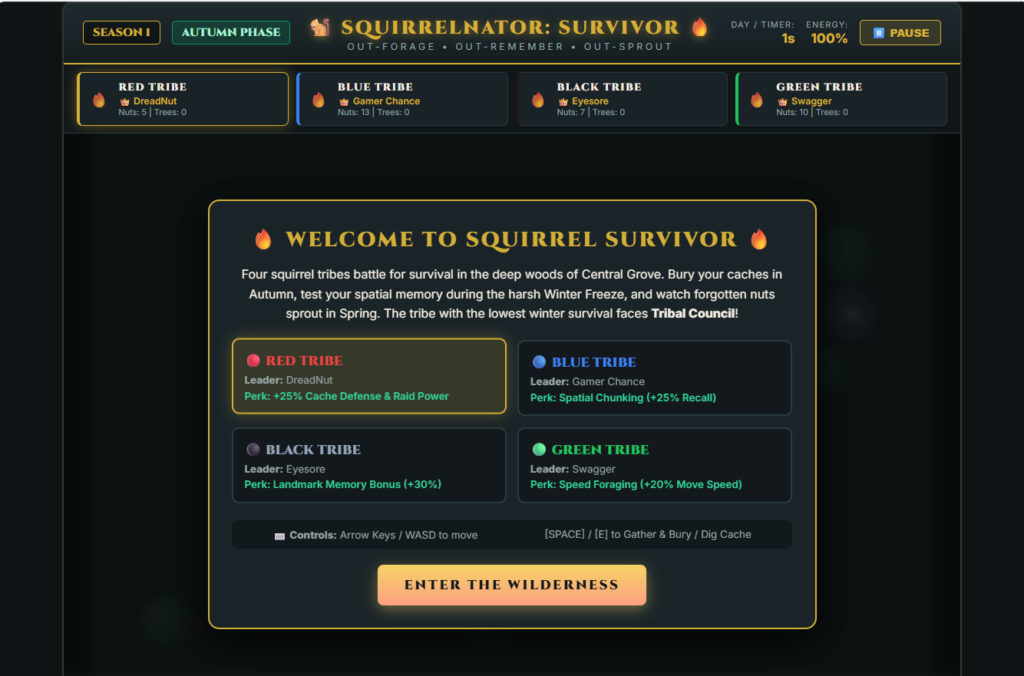
The goal is simple. Data science shapes the news we read, the medicines we take and the apps we use every day, yet many people feel it’s out of reach. Squirrelnator™ shows that it starts with something anyone can do: notice something curious, ask a good question, and count carefully. What is more you can have fun while doing it by playing the Squirrel Survivor game!
So the next time you see a squirrel burying a nut, wish it luck forgetting. It might be planting a forest, and teaching a little data science along the way.
Sources
- Smithsonian Science Education Center, “Why do squirrels bury nuts? And other mysteries”: squirrels may never recover up to 74% of buried nuts (University of Richmond study).
- Forest Preserve District of Will County, “Nature curiosity: Why do squirrels bury nuts?”: up to 3,000 nuts buried in a season (citing Scientific American).
- Untapped New York, “How many squirrels live in NYC’s Central Park?”: 2018 Squirrel Census, more than 300 volunteers, an estimated 2,373 squirrels.
The Park Sampler figures (390 vs 184) come from Squirrelnator™’s simulated park.